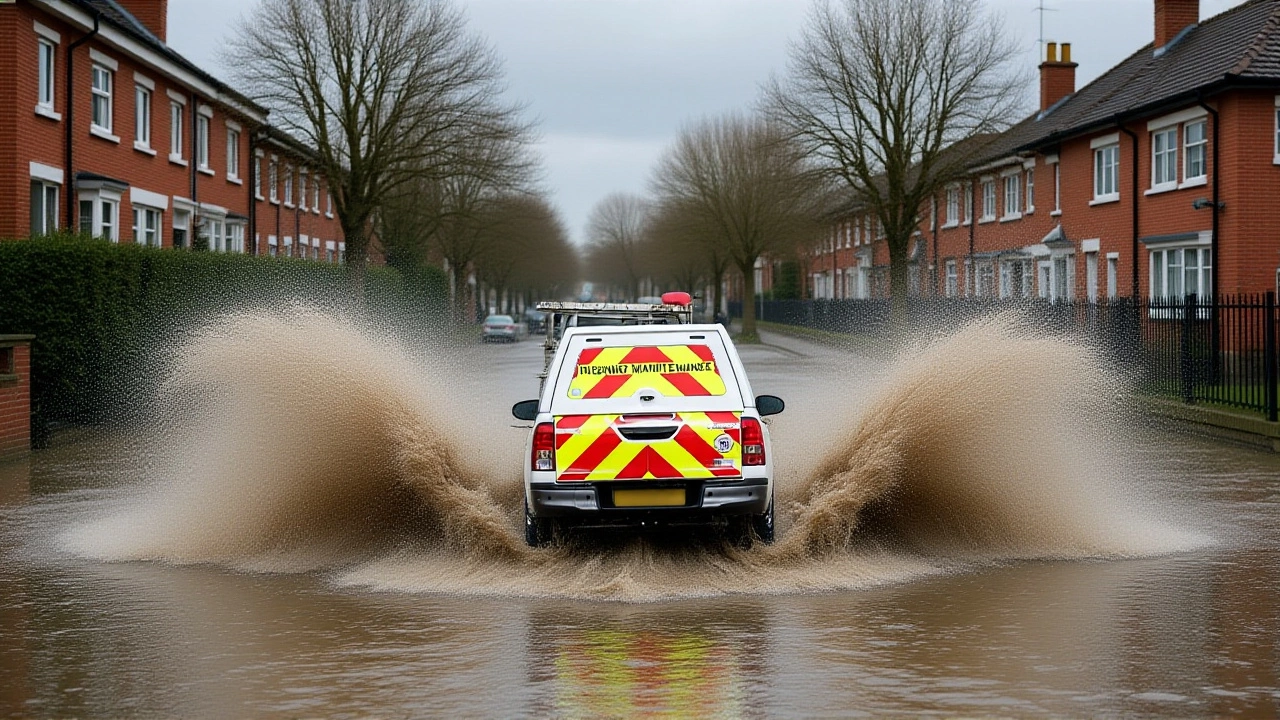
When the Met Office issued a Yellow weather warning for Stoke-on-Trent on Thursday evening, residents in Lightwood and Northwood didn’t need a weather app to know trouble was coming. The warning, tied to Storm Claudia, isn’t just another rainy Friday—it’s the latest punch in a string of wet days that have soaked the West Midlands since early November. With rainfall expected to hit 60–80 mm in places and over 100 mm on east-facing hills, the risk of surface flooding and disrupted transport is real. And it’s not just Stoke. The same system is hammering southeast Wales, parts of southern England, and the East Midlands. The Met Office, headquartered in Exeter, Devon, says the situation could worsen. An upgrade to Amber is possible if the rain keeps coming harder than predicted.
What’s Actually Falling from the Sky?
The numbers are specific, and they matter. The Met Office forecasts 30–50 mm of rain across most of the region by Saturday morning. But in pockets—especially over higher ground near the Welsh border—accumulations could hit 100 mm. That’s nearly four inches of rain in under 36 hours. To put that in perspective: Stoke-on-Trent’s average November rainfall is about 65 mm for the entire month. This storm could dump more than half of that in less than two days.
The timing is brutal. Rain is expected to start Thursday night, intensify Friday morning, and linger through most of the day. By Friday evening, streets in low-lying areas like Lightwood could see standing water. Drainage systems, already strained from last week’s downpours, may buckle. The Met Office’s Unified Model, running on supercomputers in Exeter, shows easterly winds gusting up to 19 mph, which will push water sideways across roads and into homes near rivers.
Why This Warning Matters
Yellow doesn’t mean panic. But it does mean prepare. The Met Office’s three-tier warning system is clear: Yellow = “Be aware.” That’s the sweet spot between complacency and fear. This isn’t a Red warning—no imminent danger to life yet—but the “Impact: Medium Likelihood” tag means disruption is almost guaranteed. Roads will be slick. Trains may slow or cancel. Power outages, though unlikely, are possible if trees fall on lines. And don’t forget the fog.
Here’s the twist: Saturday night into Sunday morning, the rain stops—but thick fog rolls in. Visibility could drop below 100 meters in places. Drivers who think the worst is over might find themselves crawling along M6 or A50 in near-total darkness. It’s the kind of double-whammy that catches people off guard. One moment, you’re dodging puddles. The next, you’re squinting through a windshield covered in condensation, wondering if that shape ahead is a car—or a lamppost.
Who’s Affected—and How?
The Lightwood and Northwood neighborhoods, both built on valleys with older drainage infrastructure, are most vulnerable. Local councils have already started sandbagging key junctions near the River Trent tributaries. Residents in ground-floor flats report basement pumps running non-stop since Tuesday. One homeowner in Northwood told a local reporter, “I’ve lived here 22 years. I’ve seen floods, but never this early in the season—and never this fast.”
Public transport is bracing. West Midlands Railway has warned of delays on the Stoke-to-Stafford line. National Express coaches are rerouting around flood-prone stretches of the A500. Schools in affected areas may close early—or stay closed Saturday if conditions don’t improve.
What’s Next?
The Met Office updates its forecasts every three hours. If rainfall totals in southeast Wales exceed 120 mm by Saturday afternoon, the entire warning could be upgraded to Amber—meaning “Take action.” That would trigger emergency response protocols from Staffordshire Police and the Environment Agency. Flood warnings for the River Churnet and its tributaries are already active. The agency says reservoirs in the area are at 82% capacity. They’re not at risk of bursting, but they can’t absorb much more.
Meanwhile, climate scientists are watching. Dr. Helen Shaw, a senior climatologist at the University of Birmingham, says this pattern fits a longer trend: “We’re seeing more intense rainfall events in shorter windows. The atmosphere holds more moisture as it warms. That doesn’t mean every storm is ‘climate change,’ but the frequency and severity? That’s the fingerprint.”
What Residents Should Do
Don’t wait for a siren. Don’t wait for a news alert. If you live near a stream, a culvert, or a steep hill:
- Move valuables from basements to higher floors.
- Check your drains aren’t blocked by leaves or debris.
- Keep your phone charged and have a backup power bank.
- Check the Met Office app every few hours—don’t rely on one forecast.
- Never drive through floodwater. Just one foot of moving water can sweep away a car.
And if you’re heading out Saturday night? Pack a flashlight. And don’t assume the roads are clear just because the rain stopped.
Frequently Asked Questions
How severe is the flooding risk in Lightwood and Northwood compared to other parts of Stoke-on-Trent?
Lightwood and Northwood are at higher risk due to their topography—both sit in low-lying valleys with older drainage systems that can’t handle sudden runoff. While central Stoke has better infrastructure, these areas saw flooding during the 2020 and 2022 storms. The Environment Agency has flagged 12 specific properties in Northwood as ‘high vulnerability’ in its latest flood risk map. If rainfall exceeds 80 mm in 24 hours, localized flooding is almost certain here.
Why is the Met Office warning for Storm Claudia when it’s not a named storm everywhere?
The UK Met Office only names storms that are expected to cause significant disruption, usually when winds exceed 55 mph or rainfall exceeds 30 mm in 12 hours. Storm Claudia meets the rainfall threshold for multiple regions, including the Midlands and Wales. It’s not a hurricane or a superstorm, but it’s strong enough to overwhelm drainage systems already saturated from weeks of rain. Naming helps communicate urgency—and it’s not just about wind.
What’s the difference between a Yellow and Amber weather warning?
Yellow means ‘Be aware’—expect travel delays, possible power cuts, and some flooding. Amber means ‘Take action’—widespread disruption, danger to life, and significant damage likely. An Amber warning typically means rainfall above 100 mm in 24 hours, or sustained winds over 60 mph. The current forecast for Stoke is approaching that threshold. If rainfall hits 90 mm by Friday night, the Met Office may upgrade it without warning.
Will schools and businesses close because of this warning?
There’s no automatic closure. Each school and business decides based on local conditions. But Staffordshire County Council has advised all schools in Stoke-on-Trent to prepare for early dismissals on Friday. Some private companies, including major logistics firms near the M6, are allowing remote work. The city’s public transport hub has set up a real-time dashboard for commuters. Don’t assume closures—you need to check your school’s website or employer’s policy.
Is this part of a longer weather trend in the UK?
Yes. The UK has seen 12 major flood events since 2019, up from an average of 3 per decade in the 1990s. Rainfall intensity has increased by 14% since 1990, according to the Met Office’s own climate data. Warmer air holds more moisture—so when storms hit, they dump more water faster. This isn’t a one-off. It’s a pattern. And unless emissions slow, these events will become more frequent and more severe.
How can I get real-time updates on road closures and flood alerts?
Download the official Met Office app and enable weather alerts. For road conditions, use the National Highways website or the AA JourneyCheck tool. For local flood alerts, sign up at gov.uk/flood-warning-information—it’s free and sends SMS or email alerts based on your postcode. Don’t rely on social media; official channels are more accurate and faster during emergencies.